Tarkov Loot ESP: Weapons, Ammo, Armor & Equipment
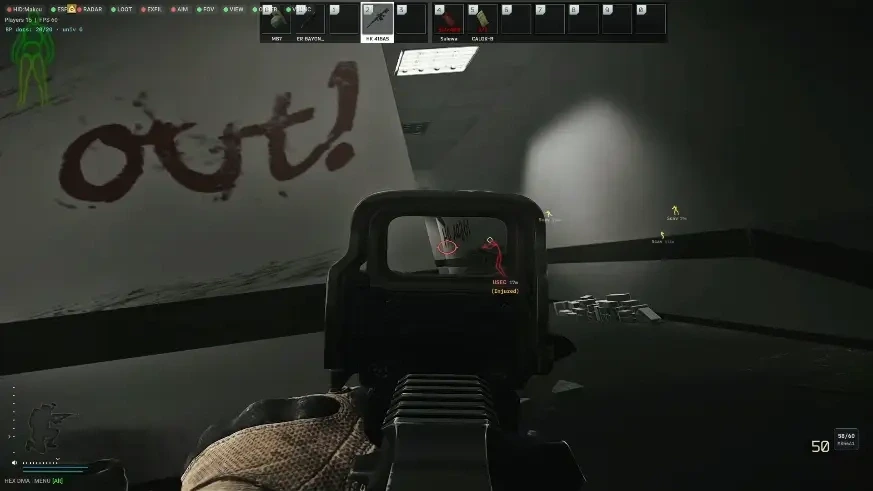
Tarkov loot ESP shows supported weapons, ammo, armor and equipment through walls, with filters that keep raid HUD readable.
Tarkov loot ESP is world-item information: supported weapons, ammunition, armor and equipment tagged beyond the default HUD. It helps you decide whether a store, stash or corpse is worth the risk before you commit.
It does not create loot, change drop rates, duplicate inventories or print unlimited cash. Searches for money glitches and dupes describe different, and usually unverified, behavior.
Practical loot ESP filters
- Start with weapons and armor only, phones and clutter drown raid focuses
- Raise max distance slowly; long-range tags add noise on open roads
- Combine with radar when you need map context, not a wall of labels
- Save a “raid” and a “PvP” preset so you are not retuning mid-fight
Also: loot / room ESP · player ESP · wallhack meaning.
Corpse priority when loot ESP floods a firefight
After a three-way scrap on Customs, bodies pile up faster than your brain can rank them. Loot ESP shines when you treat it like a triage list, not a shopping catalog. Tag weapons and armor first, then meds and keys, and leave food, fuel and barter clutter off until you are clearing a quiet extract. The goal is to reach the highest-value corpse before anyone else finishes healing and pushes your angle.
Distance caps matter more on Customs and Streets than on Factory. If you leave max range wide open, every duffle and drawer within two hundred meters competes with the player still holding an angle on your path. Tighten range when you are sprinting through cover, then widen it only when you are holding a room and can afford to read labels for twenty seconds. That rhythm keeps the overlay readable without turning every raid into neon soup.
Stash room drills you can run in Offline
Reserve and Labs reward players who already know which locked doors hide ledges worth a key. Loot ESP does not replace map knowledge, it accelerates it. In Offline with Scavs enabled, walk each stash route twice: once with filters off so you memorize vanilla spawns, once with a tight weapon-and-armor filter so you see how the overlay nudges your path. Note which rooms you would have skipped without tags, and which tags made you overstay and eat a grenade.
- Factory office runs: armor and rigs only, max distance under forty meters
- Shoreline resort west wing: keys plus injector class, mute generic barter
- Interchange tech stores: suppressors and optics before everything else
- Woods Shturman area: sniper weapons and high-tier armor, ignore small caches
Pairing loot ESP with extract timing
Players who die overweight on Customs usually misread time, not value. Loot ESP should feed your extract decision, not postpone it. When tags show three armors you want but the raid timer is inside twelve minutes, pick one upgrade and move. Elite members sometimes enable a secondary radar preset that only shows extracts and player proximity while loot filters stay aggressive—switch profiles at a bush instead of retuning forty sliders mid-raid.
BattlEye does not care whether you picked the right LEDX spawn; it cares about client integrity and behavioral patterns. Stalling in the open while you read twenty weapon names looks like AFK macro behavior to both squads and automated review. Train yourself to glance, commit, loot, and rotate. If a label is ambiguous, assume it is bait gear on a player who heard your footsteps.
Noise classes worth hiding on long raids
Barter items, quest junk, and low-tier ammo spawn everywhere Tarkov wants to slow you down. Hide those classes before you enter Woods or Shoreline marathon sessions. Keep meds visible when you run Labs, where kit recovery often comes from a body rather than a trader buy. Document two JSON presets in the member portal—"Sprint extract" and "Deep loot"—so patch days do not send you back to default chaos.
| Map | Filter focus | Typical max distance |
|---|---|---|
| Factory | Armor, rigs, keys | 35m |
| Ground Zero | Weapons, injectors | 55m |
| Lighthouse | Optics, thermal bodies | 70m |
| Streets | Keys, armor, cash stacks | 45m |
Risk notebook after wipe week
Fresh wipes compress everyone into the same high-value rooms. Loot ESP raises your confidence; it does not lower third-party risk. Log each session in a simple notebook: map, time in raid, filter preset name, deaths to unseen players, deaths while reading tags. After ten raids you will see whether distance was too wide or whether you need player ESP before loot classes at all. That honest log beats any forum thread promising "hidden loot pools" on tarkovcheat.org.
Tarkov Cheat ships loot overlays on awareness tiers with cloud presets—check the live status banner before you load a favourite filter from last month. A paused build is safer than a stale binary running into a new BattlEye revision. When status returns green, re-import presets, run one Offline pass, then queue live. No tool removes ban risk; disciplined filtering and movement keep your account living longer than greed cycles.
Keycard economy and loot ESP overlap
Labs and reserve keys create burst loot value that standard filters miss if you only highlight weapons. Maintain a key subclass visible during tournament weeks when everyone races red cards. Loot ESP showing key without player ESP on stairwell gets you killed by trios baiting key sound—you still need rotate awareness. Pair tagged keys with radar upstairs dots before committing unlock animation.
Mark key runs in notebook as high-report nights: other players assume cheat timing when you arrive improbably early at ledx room. Vary route timing even with information edge so behaviour does not crystallise into predictable script for enemies recording.
Barter pile denial in stash tetris
End-of-raid stash stuffing tempts enabling every barter class because bag space feels infinite until moving penalties bite. Loot ESP should downgrade barter visibility when extract is under five minutes—focus FIR compact valuables. Raid success metric becomes rubles per slot hour, not neon museum of every screwdriver spawn you spotted.
- Quest items visible only on maps when task active
- Hide fuel and household junk on Streets grind
- Ammo class subfilters by caliber you actually run
- Med tier colours tuned to stop injector blindness
Thermal and loot label collisions
Thermal PMC runs blur world tags against white-hot bodies. Lower loot text brightness before resort elevator fights. Skeleton ESP on players plus muted loot fonts preserves vertical read. Otherwise you stare at suppressor label while shooter leans above without seeing bone lines—you blame aim when awareness layering failed.
Post thermal session, export dedicated preset rather than toggling twelve sliders mid raid next time. Consistency beats improvisational HUD surgery that teammates cannot predict when duos comms about contacts.
Operational appendix (loot)
Deepen appendix for this slug reinforces Tarkov-specific discipline: check portal status, respect BattlEye pauses, tune presets on Offline, and extract before greed cycles convert information advantage into report bait clips. Tarkov Cheat never claims unbannable outcomes—membership rewards maintained builds and honest play hygiene across wipes when maps, economy, and kernel drivers all move on independent schedules readers must coordinate mentally each week.
Loot filter boosters for short sessions
Tight loot ESP on Factory tells you which body to tap first when time is under ten minutes. Mute barter classes so weapon labels stay legible during pistol fights.
Pair filters with hearable footsteps—BattlEye ignores your color scheme, but rushers still punish stationary readers. Sync presets through tarkovcheat.org after patch notes move spawn tables.
Quick trio run flow
Queue three short raids with identical filter JSON so your brain learns one rhythm. Swap only maximum distance between maps; chasing new colors every queue erases discipline.